

How to Choose a Roof Rack for Your 4WD
September 22, 2026
Not all 4WD roof racks are built the same and choosing the wrong one for your setup can mean limited load capacity, poor fit or a rack that doesn’t hold up on the tracks you actually drive. This guide covers what to look for before you buy, from materials and styles to vehicle compatibility and accessories.
1. Start With What You Need to Carry
Your load dictates everything else. Before looking at rack specs, be specific about what you’re putting on the roof:
- Rooftop tent – you need a tent-style rack with a mesh floor and sufficient rated load capacity for the tent plus occupants
- Camping and touring gear – a basket or open-end rack with sides for tie-off points gives you the most flexibility
- Kayaks, bikes or long items – a flat deck or open-end rack with accessory mounts suits these setups
- Trade and work gear on a 4WD – an open-end or flat deck with ladder rollers and conduit mounts is the practical choice
- Mixed loads – a basket style with four sides gives maximum load retention and versatility
If you carry different loads at different times, prioritise for what you carry most often and use accessories to extend functionality for the rest. Browse TRR accessories →
2. Check Vehicle Compatibility First
A 4WD roof rack needs to be built specifically for your vehicle – not adapted with generic brackets. Vehicle-specific racks use custom mounting systems designed for your exact make, model and year, which ensures:
- The full rated load capacity is maintained on and off-road
- The rack sits at the correct height for your roofline
- Wind noise is minimised
- No damage to your vehicle’s roof or factory rails
Use our Find My Vehicle tool to check which racks are available for your 4WD, or contact our team to confirm compatibility.
3. Choose the Right Material
For 4WD use, you have two main options – steel and aluminium. Each suits different setups.
Steel – Oval Steel Roof Rack
Steel is the stronger option and handles the load demands of serious touring better than alloy. Tradesman’s Oval Steel Roof Rack uses oval steel tubing – which gives a better strength-to-weight ratio than round tubing and improved aerodynamics. Each rack is zinc plated before powder coating, providing two layers of corrosion protection that make it lighter than most steel racks and stronger than alloy.
The Oval Steel is the right choice if you’re carrying heavy loads, doing regular outback touring, or need a rack that’ll hold up to rough tracks and daily use without compromise.
Aluminium – Wedgetail Adventure Rack
Aluminium is naturally rust-resistant and lighter than steel, making it a good option for setups where weight is a consideration — particularly for vehicles with lower roof load ratings or builds focused on long-distance touring economy. Tradesman’s Wedgetail Adventure Rack is purpose-built from high-quality aluminium for 4WD and off-road use.
If you’re unsure which material suits your setup, our team can advise based on your vehicle, typical load and where you’re taking it.
4. Choose the Right Style
Rack style determines how you load, secure and access your gear. For 4WDs the main options are:
- Basket (four sides) – best for touring setups with varied gear. Sides prevent load shift on corrugated tracks and give you multiple tie-off points
- Open ends (two sides) – two sides, open front and rear. Good for long loads and easier access from the rear
- Flat deck (no sides) – maximum versatility. Best for oversized or irregularly shaped loads, or when you want a clean platform to build on with accessories
- Tent style – three sides at front, open rear, mesh floor. Designed specifically for rooftop tent setups with storage at the front
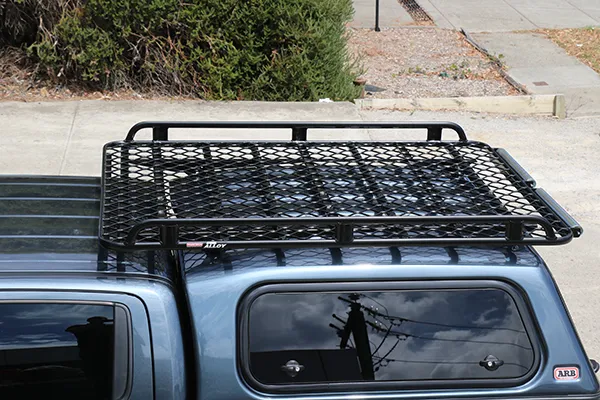
- Canopy – if your 4WD has a canopy fitted, you’ll need a canopy-specific rack. See our canopy roof rack options →
The Oval Steel is available in all five styles with custom dimensions and options available on request.
5. Check the Load Rating
Two load ratings matter when choosing a 4WD roof rack:
- The rack’s dynamic load rating – the maximum weight the rack is rated to carry while driving
- Your vehicle’s roof load rating – the maximum weight your manufacturer has approved for the roof
Always use whichever figure is lower. Exceeding your vehicle’s roof load rating can affect handling, braking distance and your insurance. If you’re unsure of your vehicle’s rating, check the owner’s manual or contact your dealer before purchasing.
Tradesman racks are individually engineered to your vehicle’s specifications, so the load rating is confirmed for your exact make and model – not a generic figure. Contact our team to confirm the appropriate rating for your setup.
6. Don’t Overlook the Wind Deflector
A roof rack without a wind deflector creates significant drag at highway speeds – increasing fuel consumption and generating wind noise that makes long drives exhausting. At Tradesman, a wind deflector is included as standard with every rack where required. It’s not an optional extra – it’s part of the package.
7. Think About Accessories Before You Buy
Planning your accessory setup before purchasing can influence which rack style you choose. Common 4WD rack accessories include:
- Jack and shovel holders
- Spare wheel carriers
- Jerry can holders
- Light mounts
- Ladder rollers
- Conduit carriers
Confirm which accessories are compatible with the rack you’re considering before you commit. All TRR accessories are designed to work with our rack range. View all accessories →
8. Australian-Made vs Imported
Most roof racks sold in Australia are imported and built to generic specifications. Tradesman has been manufacturing roof racks in Australia since 1978 – every rack is built to suit specific vehicle makes and models using individually designed mounting systems, advanced welding processes and locally sourced materials where possible.
For 4WD touring in Australian conditions – corrugated outback tracks, salt air, UV exposure – an Australian-made rack built for those conditions makes a practical difference over the life of the rack.
Frequently Asked Questions
Can I fit any roof rack to a 4WD?
No – a 4WD roof rack should be vehicle-specific. Generic racks fitted with adaptors compromise load capacity and can damage your vehicle’s roof or rails. Always choose a rack built for your exact make and model. Use our Find My Vehicle tool to check what’s available for your 4WD.
What’s the best roof rack for outback touring?
The Oval Steel Roof Rack is Tradesman’s go-to for outback touring – zinc plated, powder coated, and engineered to handle heavy loads on rough tracks. For lighter setups, the Wedgetail Adventure Rack is the aluminium alternative.
Can I carry a rooftop tent on a 4WD roof rack?
Yes – you’ll need a tent-style rack with a mesh floor. Confirm the rack’s dynamic load rating covers the combined weight of the tent when occupied, and check your vehicle’s roof load rating before purchasing.
Can I leave my roof rack on permanently?
Yes. Tradesman racks are built for permanent installation – zinc plated and powder coated for long-term weather resistance. Read more about leaving your roof rack on →
How do I know which rack fits my 4WD?
Use our Find My Vehicle tool to see compatible racks for your make, model and year. Or contact our team – we’ve been fitting 4WD roof racks since 1978 and can recommend the right setup quickly.
Does a 4WD roof rack affect fuel economy?
A bare roof rack without a wind deflector increases drag and fuel consumption. Tradesman racks include a wind deflector as standard, which significantly reduces this effect. Learn more about wind deflectors →
Ready to find the right roof rack for your 4WD?
Every Tradesman rack is Australian-made and custom-fitted to your vehicle – built to handle wherever you take it.
Most Recent Posts

How to Choose a Roof Rack for Your 4WD
Ellen Roumeliotis2026-09-22T16:20:01+10:00September 22, 2026|
Roof Rack for a Ute With a Canopy – What Are Your Options?
Ellen Roumeliotis2026-08-13T09:46:40+10:00July 24, 2026|

Do Roof Racks Use More Fuel?
Ellen Roumeliotis2026-04-24T10:38:48+10:00April 24, 2026|

Why Buying Australian Made Still Matters – Now More Than Ever
Ellen Roumeliotis2026-02-27T09:41:59+10:00February 27, 2026|

How Tradies Can Get the Best Use Out of Their Roof Rack
Ellen Roumeliotis2026-02-27T09:26:15+10:00January 27, 2026|

Top Roof Rack Modifications for Touring Setups
Ellen Roumeliotis2025-11-21T12:54:21+10:00November 21, 2025|